
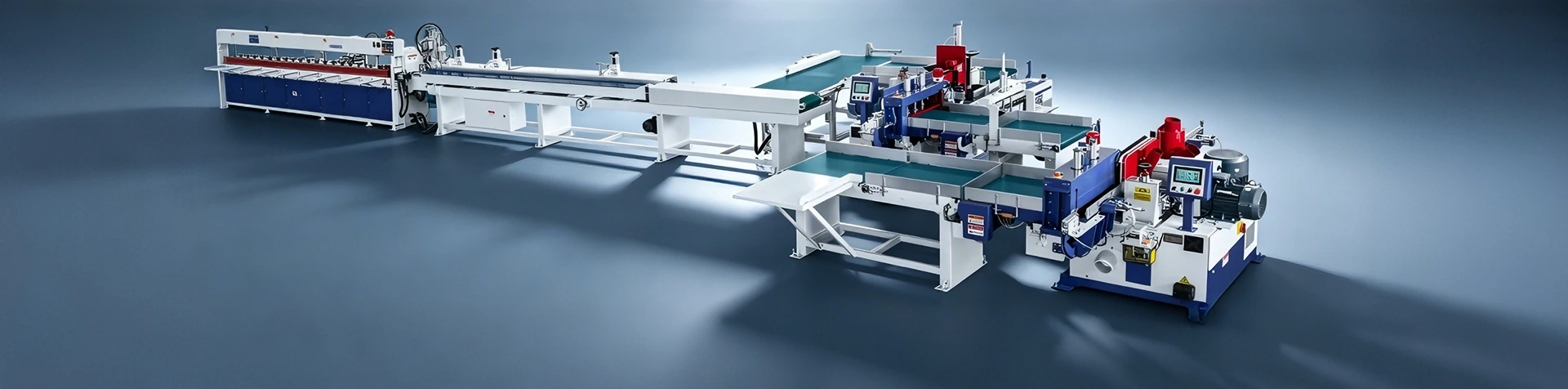
Partially Automated Timber Finger Tenon Fabrication Rows
Engineered wood processing facilities often combine multiple semi-automated systems to achieve high throughput without over-investing in full automation. Our Semi-Auto Wood Tenon Splicing Assembly Lines deliver reliable longitudinal end joining, working hand in hand with downstream finishing. In configurations that demand precise finger profiling, the workflow benefits from Half-Automated Timber Finger Joint Processing Systems to maintain consistent tooth geometry. For structural lamination and engineered beam production, many operators integrate Partially Automatic Wooden Interlock Tenon Production Chains that manage high-speed interlock tenon cycles. Additionally, when square-tooth patterns are required for robust timber joining, Semi-Automatic Square-Tooth Timber Joining Equipment Lines offer heavy-duty clamping and routing stations. These complementary platforms reduce manual handling and set the stage for a well-coordinated production floor where each piece moves from raw stock to dimensioned components with minimal intervention.
The Partially Automated Timber Finger Tenon Fabrication Rows are purpose-built to form the core of a flexible wood joining cell. Designed for workshops that need to balance operator oversight with mechanized repeatability, these rows handle both ends of beams, planks, and panel strips, creating interlocking finger profiles that maximize glue surface area. The frame is fabricated from stress-relieved steel, with adjustable infeed and outfeed roller tables to accommodate lengths from 300 mm to 3000 mm. Pneumatic vertical clamps secure the workpiece during the cutting cycle, while a secondary side-alignment fence eliminates lateral movement, ensuring tenon depth consistency across batches.
Key operational features include:
- Dual-spindle cutter units with quick-change helical carbide inserts, reducing sharpening frequency
- Servo-driven feed carriage with programmable stroke length and speed profiles for different timber densities
- Integrated glue roller station with precision metering pump, capable of applying PVA, polyurethane, or EPI adhesives without overspill
- Touchscreen HMI with recipe storage for up to 50 joint configurations, enabling fast product changeover
- Automated chip extraction via two 150 mm ports, maintaining a clean cutting zone and prolonging insert life
- Safety curtain and interlocked guarding according to EN ISO 13849-1, allowing safe access for loading while preventing cycle initiation during manual intervention
- PLC-controlled lubrication system that delivers metered oil to linear guides and ball screws, signalled by machine runtime counters
Technical parameters are summarized below:
| Parameter | Specification |
|---|---|
| Max workpiece width | 160 mm |
| Max workpiece thickness | 90 mm |
| Min workpiece length | 250 mm (single piece); 120 mm with return conveyor |
| Tenon finger length | 8 – 25 mm (stepless adjustment) |
| Finger pitch | 4 – 10 mm |
| Typical cycle time | 2.5 – 5 seconds per end (dependent on width) |
| Main cutter motor | 7.5 kW (10 HP) × 2 |
| Feed motor | 2.2 kW servo with encoder feedback |
| Compressed air requirement | 0.6 – 0.8 MPa, consumption 120 L/min |
| Dust extraction airflow | ≥ 3000 m³/h recommended |
| Machine dimensions (L × W × H) | 3600 × 1350 × 1900 mm (without return conveyor) |
| Net weight | 1450 kg |
| Control voltage | 24 VDC; main supply 380–415 V, 50/60 Hz, 3-phase |
The Partially Automated Timber Finger Tenon Fabrication Rows excel with common softwoods like pine and spruce, and they also handle hardwoods such as oak, meranti, and maple when feed rates are adjusted accordingly. Joint strength routinely surpasses 85% of solid wood values when combined with appropriate structural adhesives. Changeover between finger profiles is a tool-free process that takes under 12 minutes, aided by digital position readouts on the spindle assemblies. Optional modules extend the functionality without a complete redesign: a return conveyor enables automatic second-end processing, a pre-heating platen accelerates glue cure in unheated shops, and a laser line generator provides a visual alignment reference for short stock. The electrical cabinet carries an IP55 rating, and all sensors and limit switches are solid-state for durability in dusty environments. A centralized lubrication manifold services guide rails and leadscrews from a single grease reservoir, triggered by a cycle counter to eliminate overservicing. Operators receive status alerts and maintenance reminders directly on the HMI, and the logic controller stores error logs for diagnostics. This semi-automated approach empowers small to mid-sized manufacturers to achieve repeatable tenon quality while retaining flexibility for custom jobs, effectively bridging the gap between manual shops and fully automated plants.
Related Products




Hot Products

Manual Finger Joint Press
The Manual Finger Joint press is a specialized manual equipment designed by the supplier of Yongqiang Futai for small woodworking workshops, renovation of used wood blocks, and processing of short wood materials. It is mainly characterized by pure mechanical manual operation, low-pressure bonding, and low-cost production. It precisely completes the connection of comb-shaped wood materials, pressure bonding, and shape setting, completely solving the core pain points of small wood processing households such as insufficient budget, high cost of fully automatic equipment, unstable manual assembly, limited space, and high operational barriers.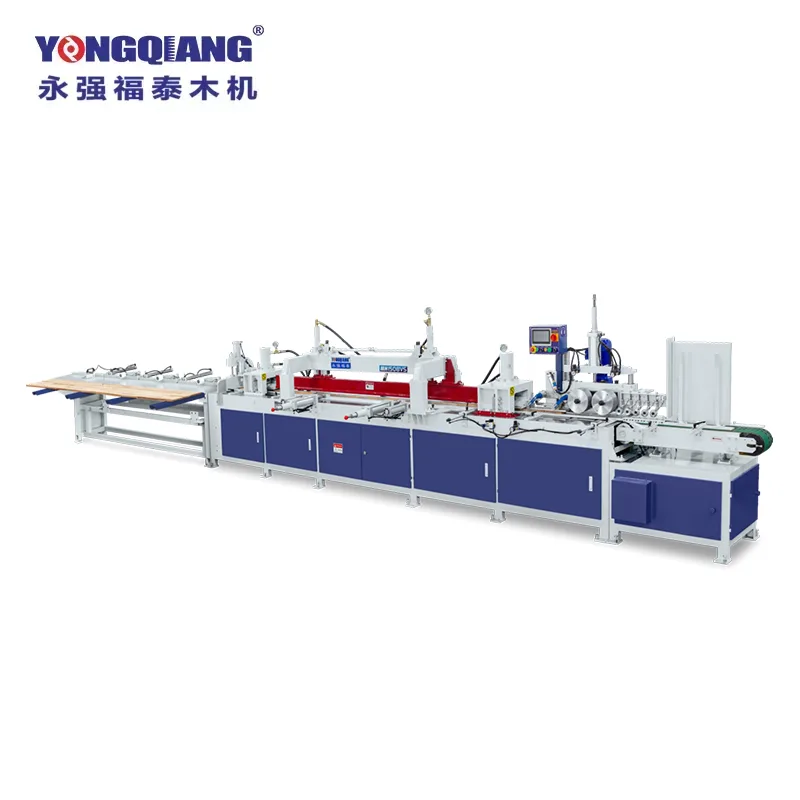
Full Automatic Wood Finger Jointer Machine
The Full Automatic Wood Finger Jointer Machine manufactured by Yongqiang Futai Factory is a CNC-integrated solid wood comb-teeth jointing equipment independently developed by the brand. It integrates automatic feeding, dual-end fine comb teeth, quantitative gluing, high-pressure connection, shaping discharge, waste material sorting, etc., and is specifically designed to solve the core problems in the wood processing industry such as short material waste, low efficiency of manual wood joining, large gap in combing teeth, easy cracking of bonding, inconsistent quality of batch production, and high labor costs.
Automatic Finger Joint Shaper with Glue Spreader
Yongqiang Futai supplies you with China Automatic Finger Joint Shaper with Glue Spreader. This product is an integrated woodworking equipment independently developed by the brand, integrating automatic feeding, precise comb teeth splitting, quantitative synchronous gluing, and smooth discharging. It is specifically designed for the comb teeth joining process of wood, completely solving the industry pain points of traditional comb teeth machines, such as uneven manual gluing, low efficiency, glue leakage and overflow, large tooth shape deviation, high wood material loss, and high labor costs.
Finger Jointers
As a professional source manufacturer specializing in the research and development, precision manufacturing, and global cross-border export of Finger Jointers, Yongqiang Futai focuses on the technology research and quality upgrading of solid wood tooth joint processing equipment, and creates a series of high-performance woodworking tooth joint machine products, covering multiple fully automatic and semi-automatic models. It provides professional, efficient, and high-precision solutions for wood comb teeth, tenoning, and tooth joint processing for global wood processing plants, furniture production enterprises, construction wood square processing plants, and waste wood recycling merchants.
Infinite Length Automatic Wood Joining Machine
The infinite length automatic wood joining machine is a disruptive wood processing equipment developed by Yongqiang Futai Company. It integrates intelligent recognition, high-precision milling teeth, automatic gluing, and continuous crimping, achieving true automation of infinite length wood production.
Fully Automatic Finger Jointer
The Fully Automatic Finger Jointer developed by Yongqiang Futai Manufacturers is a high-performance core equipment for joining solid wood short materials, meticulously manufactured. It is dedicated to addressing the core pain points in the global wood processing industry, such as high reliance on manual labor in traditional tooth-jointing operations, poor joint accuracy, low production efficiency, inconsistent product qualification rates, high wood waste, and high maintenance costs.
- Related Blog
- Reviews
