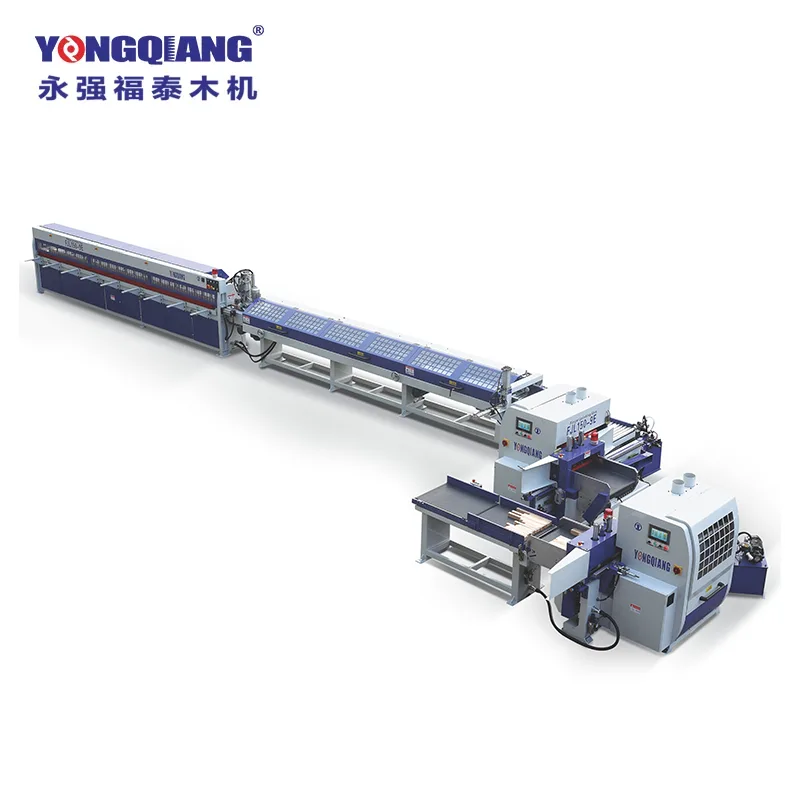
Constructional timber is widely used for buildings, roof structures, wall frames, floors, packaging, infrastructure, and other demanding applications. As construction projects become more standardized while requiring tighter dimensional tolerances, timber processors need production systems that can transform raw logs and boards into consistent, usable construction materials with less waste and labor.
Constructional timber lines provide an integrated approach to timber preparation, cutting, sizing, grading, sorting, and handling. Instead of relying on disconnected machines and manual operations, a properly designed production line coordinates multiple processing stages into a more stable workflow. This article explains how these systems work, where they create value, what buyers should evaluate before investment, and how to avoid common production problems.
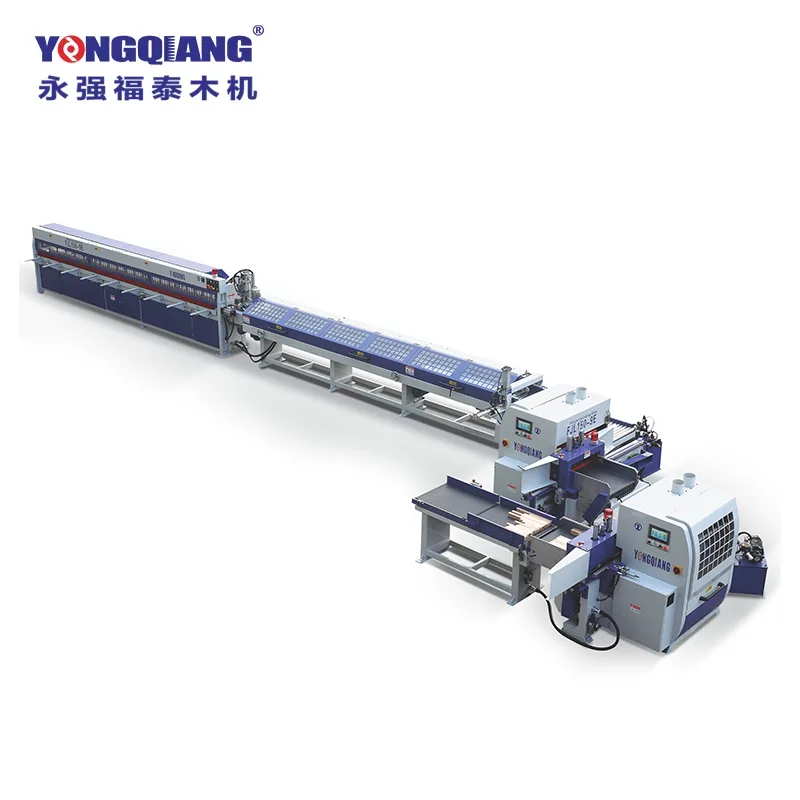
Understanding Constructional Timber Lines
A constructional timber line is a coordinated production system designed to process wood into timber products suitable for structural and general construction applications. Depending on the raw material and final product, the line may include feeding, sawing, trimming, sizing, sorting, grading, conveying, stacking, and related material-handling equipment.
The exact configuration depends on the species of wood, log or board dimensions, moisture conditions, required output, finished-product specifications, available factory space, and desired degree of automation. Therefore, there is no single configuration that is ideal for every timber processor.
The real value of a well-engineered line comes from connecting individual operations into a controlled production flow. Raw material enters at one end, moves through successive processing stages, and leaves as standardized timber products with fewer unnecessary interruptions.
Typical applications include:
-
Structural framing timber
-
Roof and floor construction components
-
Wall-frame materials
-
Wooden building components
-
Industrial timber products
-
Standardized construction boards and sections
Why Constructional Timber Production Needs an Integrated Line
Many timber factories begin with individual machines because this approach can reduce the initial investment. However, as production volume increases, disconnected equipment can create hidden costs. Operators may need to move material between machines manually, production may stop while material is being transferred, and differences between operators can affect consistency.
An integrated constructional timber line addresses these issues by treating production as one continuous process. Conveyors and automated feeding systems can reduce manual movement, while coordinated controls help maintain a predictable processing sequence.
|
Production Challenge
|
Line-Based Solution
|
|
Frequent manual handling
|
Conveying and automated material transfer
|
|
Uneven production speed
|
Coordinated processing and controlled feeding
|
|
Inconsistent dimensions
|
Controlled sizing and precision cutting
|
|
Material accumulation
|
Balanced production stages and optimized transfer
|
How a Constructional Timber Line Works
Although configurations vary, a typical production concept follows a logical sequence from raw material preparation to finished timber handling.
01. Feeding
Raw logs, cants, boards, or other timber blanks are introduced into the processing system.
02. Primary Processing
Sawing and related operations transform the incoming material into manageable timber sections.
03. Sizing
Planing, trimming, cutting, or other operations establish the required dimensions.
04. Sorting
Finished pieces can be classified according to dimensions, quality, grade, or intended application.
05. Stacking
Processed timber is collected and arranged for storage, further processing, or shipment.
The most important consideration is not simply the number of machines installed. The relationship between machines matters just as much. Feeding speed, conveyor capacity, cutting speed, buffer areas, operator access, dust extraction, and finished-product handling should work together rather than operate as isolated systems.
Key Benefits for Timber Manufacturers
-
Higher production efficiency. Connected processes reduce unnecessary transportation and waiting time between operations.
-
Better labor utilization. Automation can reduce repetitive material handling, allowing employees to focus on machine supervision, quality checks, and maintenance.
-
More consistent output. Controlled machine settings and repeatable feeding help reduce variations caused by manual processing.
-
Lower material loss. Accurate cutting and better process control can improve raw-material utilization when the line is properly configured.
-
Improved production visibility. Centralized controls can make it easier for operators to monitor operating conditions and identify process interruptions.
-
Greater scalability. A well-planned production system can provide a stronger foundation for future capacity expansion.
The practical takeaway:
A constructional timber line should be evaluated as a complete production system, not simply as a collection of individual machines.
Improving Timber Quality and Dimensional Consistency
Construction applications often require timber to meet defined dimensional and quality requirements. Even relatively small variations can create problems during assembly, especially when components must fit together repeatedly across large projects.
A properly configured line helps establish repeatable processing conditions. Accurate positioning, stable feeding, appropriate cutting tools, effective material support, and controlled machine parameters all contribute to finished-product consistency.
Quality control should not be treated as an inspection step added at the end. It should be incorporated throughout the production process. Operators can monitor dimensions, surface condition, cutting quality, moisture-related issues, and other characteristics at appropriate points in the workflow.
Important: The final quality of constructional timber depends on raw-material quality, machine configuration, tooling, maintenance, operating conditions, and the specifications of the finished product. Equipment alone cannot compensate for unsuitable raw material or incorrect process settings.
The Role of Automation in Modern Timber Processing
Automation has become increasingly valuable as timber manufacturers seek higher throughput without proportionally increasing labor requirements. Depending on the production objective, automation may cover feeding, positioning, conveying, sorting, stacking, machine coordination, and production monitoring.
Automated systems can also improve process repeatability. When machines operate according to defined parameters, the production environment becomes less dependent on individual operator techniques.
However, automation should solve a specific production problem rather than simply increase system complexity. A sophisticated system that does not match the factory's raw materials, product range, or workforce can create unnecessary costs. The best solution is one that balances automation level, throughput, ease of operation, maintenance requirements, and investment budget.
What to Evaluate Before Buying a Timber Line
Choosing a constructional timber line is a long-term production decision. Buyers should define their requirements before discussing individual machines or specifications.
|
Evaluation Area
|
Questions to Ask
|
|
Raw Material
|
What wood species, dimensions, moisture conditions, and material variations will be processed?
|
|
Output
|
What hourly or daily production capacity is actually required?
|
|
Product Range
|
Will the line process one standardized product or multiple sizes and specifications?
|
|
Factory Space
|
Is there enough room for equipment, conveyors, buffers, maintenance access, and finished products?
|
|
Maintenance
|
Are wear parts accessible, replaceable, and readily available?
|
|
Technical Support
|
What installation, commissioning, training, documentation, and after-sales support are available?
|
A reliable supplier should also be willing to discuss the complete production workflow rather than focusing only on equipment specifications. Site layout, material flow, electrical requirements, dust management, operator access, safety provisions, and future expansion should all be considered during the planning stage.
Maintenance and Production Reliability
Even a high-quality timber line can lose performance when maintenance is neglected. Saws, cutting tools, bearings, conveyors, belts, sensors, motors, hydraulic or pneumatic components, and other wear parts require regular attention.
Preventive maintenance is generally more practical than waiting for an unexpected failure to stop production. A maintenance schedule should include routine inspection, cleaning, lubrication where applicable, tool condition checks, fastener inspection, sensor verification, and replacement of worn components.
-
Keep cutting tools properly maintained and aligned.
-
Inspect conveyors and material-transfer components regularly.
-
Clean dust and wood residues from designated areas.
-
Monitor abnormal vibration, noise, heat, or movement.
-
Check electrical and control-system components according to manufacturer guidance.
-
Keep essential replacement parts available for critical equipment.
-
Train operators to recognize early signs of equipment problems.
Good maintenance protects not only machine availability but also product consistency. A worn cutting component, poorly aligned conveyor, or unstable feeding mechanism can gradually affect dimensions and finish long before a complete breakdown occurs.
Integrated Lines vs. Disconnected Machines
Individual machines still have a place in small workshops and flexible production environments. However, manufacturers with higher throughput requirements should carefully consider the total cost of manual transfer, downtime, floor-space usage, and inconsistent processing.
|
Factor
|
Integrated Timber Line
|
Disconnected Machines
|
|
Material Flow
|
More continuous
|
More manual transfer
|
|
Automation
|
Can be centrally coordinated
|
Usually more independent
|
|
Scalability
|
Strong when planned correctly
|
May require more manual coordination
|
|
Flexibility
|
Depends on line configuration
|
Often easier to reconfigure individually
|
The right choice depends on production volume and business objectives. For manufacturers aiming for stable, repeatable, large-scale output, an integrated solution can offer substantial operational advantages when it is correctly designed and installed.
Frequently Asked Questions
What are constructional timber lines used for?
They are used to process wood into standardized timber products for construction and related applications. Depending on the configuration, a line can include sawing, sizing, trimming, sorting, conveying, stacking, and other operations.
Can a constructional timber line process different timber sizes?
Many systems can be configured for multiple dimensions, but the actual range depends on machine specifications, feeding arrangements, tooling, controls, and the required production speed.
How can a timber line reduce labor requirements?
Automated feeding, conveying, sorting, and stacking can reduce repetitive manual handling. Operators can then concentrate more on supervision, quality control, adjustments, and maintenance.
What determines the capacity of a timber processing line?
Capacity is influenced by raw-material dimensions, wood characteristics, machine speeds, feeding efficiency, cutting requirements, product specifications, operator practices, and the balance between different production stages.
Is automation necessary for every timber factory?
No. The appropriate automation level depends on production volume, labor availability, product consistency requirements, investment budget, and future expansion plans. Automation should be selected according to actual production needs.
Why is supplier experience important when purchasing a timber line?
A timber line involves more than individual machines. Experienced suppliers can help consider process flow, equipment matching, layout, commissioning, operator training, maintenance, and long-term production requirements.
Building a More Reliable Timber Production Future
Constructional timber lines can help manufacturers move from fragmented processing toward a more coordinated, efficient, and controllable production environment. The strongest results come from matching the line configuration to the actual raw materials, product specifications, factory layout, capacity target, workforce, and long-term business plan.
For companies evaluating a new line, the most important step is to look beyond individual machine prices. Consider the complete production cycle: how material enters the factory, how each processing stage connects, where bottlenecks may occur, how quality is controlled, how finished products are handled, and how the system will be maintained over years of operation.
Guangdong Shunde Yongqiang Futai Intelligent Woodworking Machinery Co., Ltd. focuses on woodworking machinery solutions and can provide professional support for manufacturers seeking to improve timber processing efficiency and production organization. A detailed discussion of raw materials, required output, finished-product dimensions, factory conditions, and automation expectations is an effective starting point for developing a suitable solution.
Contact us to discuss your constructional timber line requirements, production goals, equipment configuration, and customized woodworking machinery solution.