

How Do Finger Jointing Machines and Lines Improve Wood Processing Efficiency?
Finger Jointing Machines and Lines have become an important solution for wood manufacturers seeking to turn shorter wood pieces into longer, stable, and commercially useful components. By combining accurate end profiling, adhesive application, alignment, pressing, and controlled feeding, a modern finger jointing system can reduce material waste while improving production consistency.
This guide explains the working principle, major equipment configurations, selection considerations, production challenges, maintenance requirements, and practical benefits of finger jointing technology. It is designed to help furniture manufacturers, flooring producers, timber processors, woodworking factories, and other wood-product businesses make more informed equipment decisions.
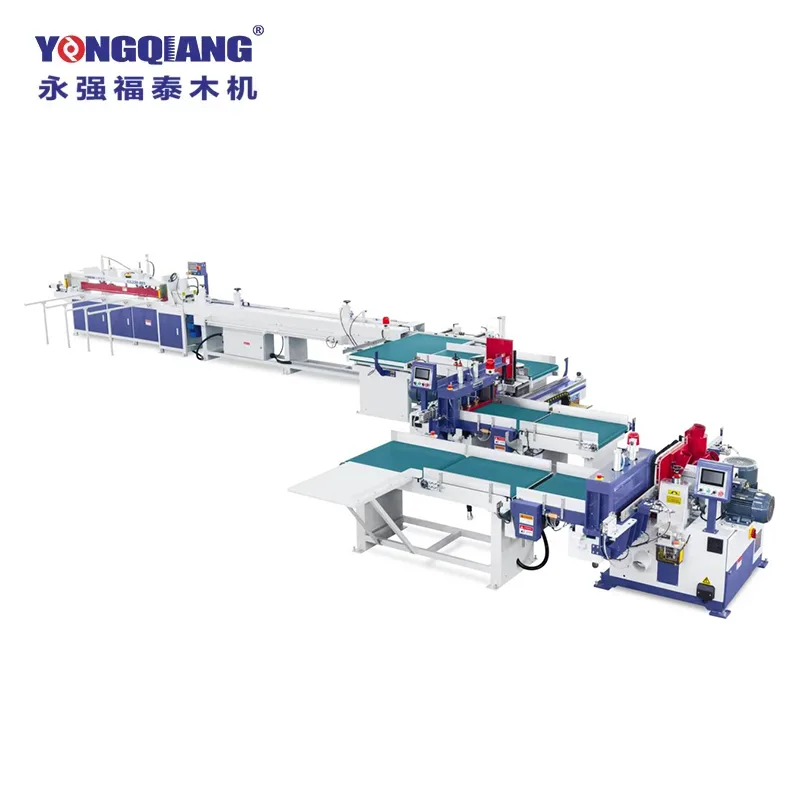
Finger jointing technology provides a practical way to recover shorter or defective sections of wood and transform them into longer usable pieces. A complete production line normally integrates material preparation, finger cutting, glue application, alignment, pressing, curing, trimming, and inspection. The right configuration depends on wood species, dimensions, production volume, joint requirements, adhesive system, available space, and automation level. Careful equipment selection and process control are essential for achieving strong joints, accurate dimensions, stable operation, and reliable output.
Table of Contents
- Understanding Finger Jointing Technology
- Common Production Problems Without an Efficient System
- How a Finger Jointing Line Works
- Key Machines in a Finger Jointing Production Line
- Major Benefits for Wood Manufacturers
- Factors to Consider Before Purchasing Equipment
- How to Achieve Reliable Finger Joint Quality
- Maintenance and Daily Operation
- Machine and Line Configuration Comparison
- Frequently Asked Questions
- Build a More Efficient Wood Processing Workflow
Understanding Finger Jointing Technology
Wood processing inevitably generates shorter pieces. These pieces may come from cutting operations, trimming, defects, dimensional adjustments, or the optimization of raw timber. Although they may not be long enough for a specific application, many still contain valuable material.
Finger jointing provides a way to recover this material. Instead of discarding suitable short sections, manufacturers can machine their ends into interlocking finger profiles, apply adhesive, accurately position the pieces, and press them together to form a continuous joint.
The result is a longer wood component that can be further processed into products such as furniture components, laminated wood products, door and window parts, flooring materials, solid wood panels, and other engineered or joined timber products.
Key principle: The performance of a finger joint depends on more than the cutting profile alone. Wood moisture, machining accuracy, adhesive distribution, pressure, alignment, curing conditions, and operator control all influence the final result.
For this reason, professional Finger Jointing Machines and Lines are designed as coordinated systems rather than isolated machines. Integrating multiple stages can make material movement more predictable and reduce inconsistencies between individual processing steps.
Common Production Problems Without an Efficient System
Many woodworking factories face similar challenges when producing long wood components from shorter stock. Understanding these problems helps explain why automated finger jointing equipment can deliver practical value.
High material waste: Short pieces that could potentially be reused are often discarded because manual joining is too slow or inconsistent.
Inconsistent joint quality: Manual positioning and adhesive application can produce differences in joint tightness, alignment, and bonding performance.
High labor dependency: When every stage requires manual handling, more workers may be needed and production speed can fluctuate with operator experience.
Production bottlenecks: A fast cutting process can be undermined by slow feeding, gluing, pressing, or unloading operations.
Difficulty maintaining dimensional accuracy: Inaccurate finger profiles or uneven pressing can affect the dimensions of downstream components.
A well-designed production line addresses these issues by coordinating processing speed, feeding, positioning, bonding, and pressing. This creates a more stable workflow from raw material preparation to finished joined stock.
How a Finger Jointing Line Works
A complete finger jointing process can vary according to machine design, wood type, product specifications, and factory requirements. However, the general workflow follows several important stages.
- Material preparation: Wood pieces are inspected, sorted, cut, and prepared according to the required dimensions.
- Defect removal: Unsuitable sections such as cracks, excessive knots, decay, or other defects can be removed before joining.
- Finger profiling: The ends of the wood pieces are accurately machined into interlocking finger profiles.
- Adhesive application: Suitable adhesive is applied evenly to the prepared joint surfaces.
- Assembly and alignment: The finger profiles are brought together and positioned correctly.
- Pressing: Controlled pressure forces the joint surfaces together and supports proper bonding.
- Curing: The adhesive develops the required bonding strength according to its formulation and process conditions.
- Trimming and finishing: Joined material may be trimmed, planed, sanded, or otherwise processed for its final application.
- Inspection: Operators or automated systems check dimensions, joint appearance, alignment, and other quality criteria.
Automation can connect these stages into a continuous or semi-continuous workflow. This is particularly valuable for factories handling large quantities of repetitive wood components.
Key Machines in a Finger Jointing Production Line
A finger jointing line may contain different equipment combinations depending on production requirements. The following modules are commonly associated with industrial finger jointing operations.
| Machine or Module | Main Function | Production Value |
|---|---|---|
| Cutting Equipment | Prepares wood pieces to suitable lengths and removes unsuitable sections. | Creates consistent workpieces for downstream processing. |
| Finger Profiling Machine | Machines interlocking finger profiles on wood ends. | Provides the geometric foundation for the joint. |
| Glue Application System | Applies adhesive to the joint surfaces. | Supports controlled and repeatable bonding. |
| Feeding and Alignment System | Transfers and positions components accurately. | Reduces manual handling and alignment errors. |
| Finger Joint Press | Applies controlled joining pressure. | Helps produce stable, consistent joints. |
| Trimming or Finishing Unit | Processes the joined component for final dimensions. | Improves downstream processing efficiency. |
The exact configuration should not be selected solely by looking at individual machine specifications. The interaction between machines is equally important. A high-capacity profiling machine may provide little benefit if the feeding or pressing section cannot maintain the same production rhythm.
Major Benefits for Wood Manufacturers
When correctly configured and operated, Finger Jointing Machines and Lines can provide several practical benefits throughout a wood processing operation.
- Better material utilization: Suitable short wood sections can be converted into longer usable stock rather than automatically becoming waste.
- Improved production consistency: Automated positioning and controlled machining help reduce variations between batches.
- Higher processing efficiency: Integrated feeding, profiling, gluing, and pressing can reduce unnecessary manual handling.
- Reduced labor pressure: Automation allows operators to focus more on supervision, inspection, and process control.
- Stable product dimensions: Accurate machining and controlled joining can help manufacturers maintain repeatable specifications.
- Greater production flexibility: Depending on the machine configuration, manufacturers can process different sizes and grades of wood.
- Better downstream compatibility: Consistent joined stock can simplify subsequent planing, cutting, sanding, molding, and assembly processes.
For manufacturers operating at scale, these improvements can influence not only individual production steps but also the overall economics of material consumption and factory workflow.
Factors to Consider Before Purchasing Equipment
Choosing a finger jointing machine should begin with the production requirement rather than the machine name alone. Buyers should evaluate the complete process and identify the most important operational constraints.
| Consideration | Questions to Evaluate |
|---|---|
| Wood Material | Which species, grades, moisture levels, and wood conditions will be processed? |
| Workpiece Dimensions | What are the minimum and maximum thickness, width, and length requirements? |
| Production Capacity | How much joined material is required per shift, day, or month? |
| Automation Level | Is manual, semi-automatic, or fully automated production more appropriate? |
| Factory Space | Can the facility accommodate the entire line, material storage, and operator access areas? |
| Adhesive System | Which adhesive is required, and how should application and curing be managed? |
| After-Sales Support | Are installation guidance, spare parts, troubleshooting, and technical support available? |
It is also important to discuss the actual application with the equipment manufacturer. Providing samples, drawings, target dimensions, production volumes, and wood specifications can help the supplier recommend a more appropriate configuration.
How to Achieve Reliable Finger Joint Quality
Equipment alone cannot guarantee a strong and consistent finger joint. Production conditions must also be controlled carefully.
- Control wood moisture: Excessively wet or unstable material can negatively influence machining and adhesive bonding.
- Maintain cutting accuracy: Finger profiles should be consistent so that mating surfaces fit correctly.
- Use the correct adhesive: Adhesive selection should match the wood, application, environmental conditions, and required performance.
- Maintain even glue distribution: Excessive or insufficient adhesive can both create problems.
- Control pressing conditions: Pressure and pressing time should follow the process requirements of the adhesive and joint design.
- Inspect joint alignment: Misalignment can affect appearance, dimensional accuracy, and downstream processing.
- Monitor tooling condition: Worn cutters can gradually reduce machining accuracy and increase the risk of defective joints.
Practical tip: Establish inspection points at several stages instead of checking only the final product. Early detection of incorrect dimensions, damaged profiles, uneven glue application, or alignment problems can prevent larger batches from being affected.
Maintenance and Daily Operation
Regular maintenance is essential for keeping finger jointing equipment accurate and productive. Because the system involves cutting, feeding, adhesive handling, pressing, and mechanical movement, different components require different maintenance routines.
- Clean wood dust from machine surfaces, cutting areas, sensors, and ventilation points.
- Inspect cutting tools regularly and replace or sharpen them when required.
- Check feeding mechanisms for wear, contamination, or slippage.
- Inspect adhesive application components and clean them according to the adhesive manufacturer's requirements.
- Check pneumatic, hydraulic, electrical, and mechanical systems for abnormal operation.
- Inspect pressing components for alignment and wear.
- Keep fasteners and moving components properly maintained according to the machine manufacturer's instructions.
- Record recurring faults and maintenance activities to identify developing problems early.
Operator training is equally important. Even highly automated machinery requires personnel who understand basic machine settings, material preparation, quality inspection, safety procedures, and abnormal-condition handling.
Machine and Line Configuration Comparison
Different factories may require very different levels of automation. A smaller workshop may prioritize flexibility and investment efficiency, while a large production facility may need continuous feeding and higher throughput.
| Configuration | Suitable Application | Typical Characteristics |
|---|---|---|
| Standalone Finger Jointing Machine | Small to medium production operations | Flexible layout, simpler integration, lower initial complexity. |
| Semi-Automatic System | Growing manufacturers | Balances automation with operator involvement and production flexibility. |
| Integrated Finger Jointing Line | Medium to large industrial production | Multiple processes connected for higher efficiency and reduced manual handling. |
| Customized Production Line | Specialized or high-volume applications | Configured around specific materials, dimensions, capacity, layout, and product requirements. |
There is no universal configuration that fits every factory. The best solution is the one that matches the raw material, target product, required output, available workforce, plant layout, and long-term production strategy.
Frequently Asked Questions
What are Finger Jointing Machines and Lines used for?
They are used to join shorter wood pieces into longer components through accurately machined finger profiles, adhesive application, alignment, and pressing. They are widely applicable to furniture, flooring, timber, door, window, and other woodworking applications.
Can finger jointing equipment reduce wood waste?
Yes. Suitable short pieces that would otherwise have limited commercial value can potentially be recovered and joined into longer usable components. The actual material-saving level depends on the incoming wood quality and production process.
What wood can be processed by a finger jointing machine?
The suitable wood species and dimensions depend on the specific machine design, tooling, and application. Buyers should provide detailed information about wood species, density, moisture, dimensions, and intended product before selecting equipment.
Is a complete production line better than a standalone machine?
Not necessarily. A complete line can offer greater automation and process coordination, but a standalone machine may be more appropriate for smaller factories or applications requiring greater flexibility. Production volume and workflow should determine the configuration.
What affects finger joint strength?
Important factors include wood condition, moisture content, finger profile accuracy, adhesive selection, glue application, alignment, pressing conditions, curing, and overall process control.
How should a manufacturer select a supplier?
Look beyond the machine price. Evaluate manufacturing experience, machine construction, technical specifications, customization capabilities, testing procedures, installation support, spare parts availability, and after-sales technical service.
Build a More Efficient Wood Processing Workflow
Modern wood processing is increasingly focused on maximizing material utilization, improving production consistency, and reducing unnecessary manual operations. A properly engineered finger jointing solution can help manufacturers transform suitable short wood pieces into longer components while creating a more organized and repeatable production workflow.
Guangdong Shunde Yongqiang Futai Intelligent Woodworking Machinery Co., Ltd. focuses on intelligent woodworking machinery and production solutions for manufacturers seeking efficient and practical wood processing equipment. For projects involving Finger Jointing Machines and Lines, the right solution should be developed around the customer's wood material, product dimensions, production capacity, factory layout, and automation requirements.
Looking for the Right Finger Jointing Solution?
If you are planning a new woodworking production line, upgrading existing equipment, or looking for a customized finger jointing system, contact Guangdong Shunde Yongqiang Futai Intelligent Woodworking Machinery Co., Ltd. for professional assistance.
Share your wood specifications, target production capacity, product dimensions, and automation requirements with our team. We can help you evaluate a suitable equipment configuration and develop a practical solution for your production needs.
Contact us today to discuss your Finger Jointing Machines and Lines project.
Previous:No News