
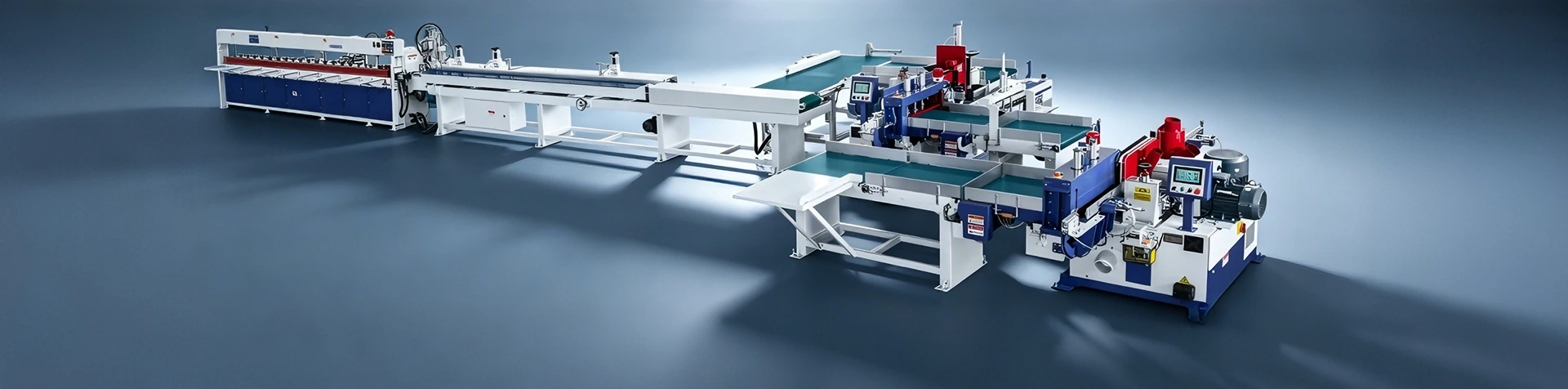
Half-Automated Timber Finger Joint Processing Systems
In modern wood processing, achieving structural integrity and seamless joints is critical for high-volume furniture and construction material production. Our half-automated timber finger joint processing systems deliver that reliability, balancing operator oversight with mechanized precision. As part of a broader family of modular woodworking solutions, these units integrate smoothly with Semi-Auto Wood Tenon Splicing Assembly Lines, ensuring consistent tenon geometry before adhesive application. The workflow often pairs with Partially Automatic Wooden Interlock Tenon Production Chains to create robust interlocking profiles that resist shear forces. For rectangular joint patterns, our system connects directly to Semi-Automatic Square-Tooth Timber Joining Equipment Lines, enabling clean square-tooth splicing without manual realignment. Additionally, the architecture supports Half-Auto Wood Notch Splicing Manufacturing Units for specialized notch cuts, expanding application range from door frames to laminated beams.
The Half-Automated Timber Finger Joint Processing Systems represent a strategic upgrade for workshops transitioning from manual assembly to lean production. Each machine combines a hydraulically driven pressing table, precision-machined guides, and a PLC-controlled feed mechanism to produce finger joints with a dimensional tolerance of ±0.3 mm. Operators load the timber onto the infeed conveyor, which automatically aligns the stock using pneumatic clamps before the cutting heads shape the finger profile. The glue applicator then coats each tooth with a uniform layer of cross-linking adhesive, and the joining station presses the pieces together under controlled pressure until the initial tack forms. This semi-automated approach reduces labor fatigue while maintaining the flexibility to handle variable board widths and species, from soft pine to dense hardwoods like oak and ash.
Key technical specifications showcase the system’s adaptability across production environments:
- Finger length range: 10 mm to 50 mm, adjustable via interchangeable cutter heads
- Max workpiece width: 300 mm (standard), with optional 450 mm extension
- Min/max board thickness: 12 mm – 80 mm, handled without recalibration
- Hydraulic pressing force: 15,000 N, evenly distributed across the joint face
- Cycle time per joint: 4–8 seconds, depending on adhesive open time
- PLC interface with 7-inch touchscreen, supporting 20 job presets and fault diagnostics
Detailed performance metrics are compiled in the parametric table below, based on typical softwood processing at 12% moisture content:
| Parameter | Value | Unit |
|---|---|---|
| Production rate (single shift) | 2,500 – 3,200 | joints per 8 hr |
| Installed power | 7.5 | kW |
| Compressed air requirement | 6 bar, 400 L/min | — |
| Finger profile types | Mini, standard, wedge | — |
| Glue consumption per joint | 2 – 5 | g |
| Noise level at operator position | ≤ 78 | dB(A) |
| Machine weight | 2,100 | kg |
| Footprint (L × W × H) | 3,800 × 1,400 × 1,600 | mm |
These Half-Automated Timber Finger Joint Processing Systems operate on a closed-loop hydraulic circuit with an oil cooler, sustaining continuous duty without thermal drift affecting joint accuracy. The cutter spindles feature quick-change chucks that reduce tooling swap downtime to under three minutes, a practical advantage when alternating between finger lengths. Built-in sensors monitor glue temperature and feed alignment, triggering visual alerts on the HMI if parameters deviate. The frame is constructed from stress-relieved cast iron, dampening vibration during high-speed profiling. End-to-end safety is addressed via dual-channel light curtains and a physical enclosure around the cutting zone, meeting CE and ANSI B11 standards. Serviceability is designed for in-house maintenance teams, with all wear components—seals, belts, and linear bearings—accessible through hinged panels without dismantling major assemblies. Routine calibration uses a laser-guided checking fixture that ships with every unit, ensuring that even after years of operation, the system delivers joint strength exceeding 80% of solid wood baseline in bending tests.
Related Products


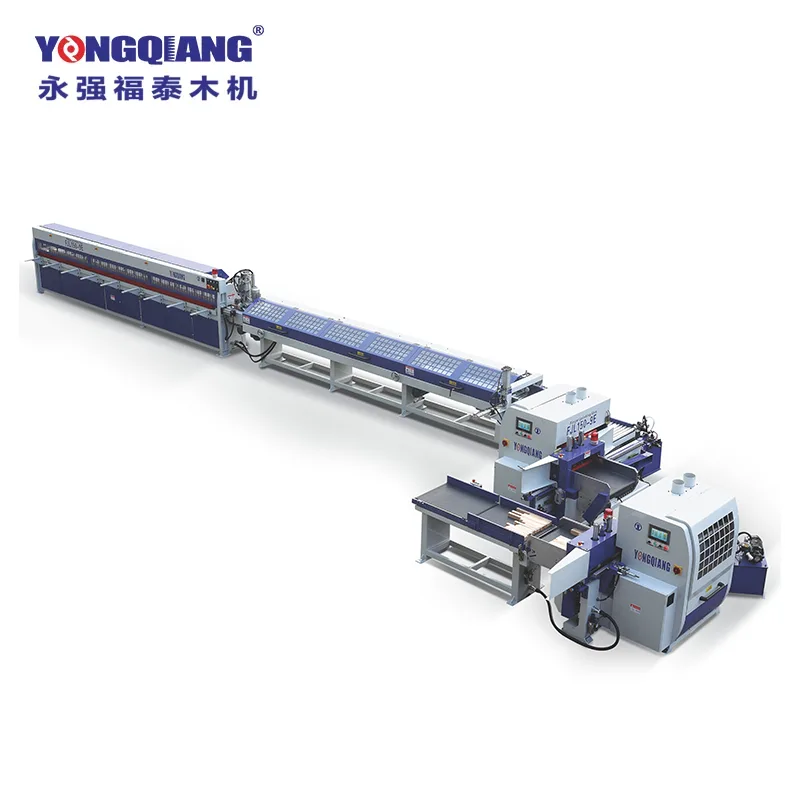


Hot Products
Finger Jointing Machines and Lines
The China Finger jointing machines and lines in Yongqiang Futai Factory are a complete series of solid wood comb jointing equipment independently developed by the brand, covering both single-machine processing and full-line automated production. They include manual comb jointing machines, fully automatic comb jointing machines, glue-coated comb jointing machines, comb jointing and pressing machines, infinite-length comb jointing forming production lines, and fully automatic comb jointing production lines for both wood boards and wood squares. These products are specifically designed to provide single-machine procurement, full-line customization, and one-stop comb jointing processing solutions for global wood processing enterprises, effectively addressing the core industry pain points such as waste of short wood materials, low efficiency of manual processing, poor joint quality, poor line connection, difficulty in large-scale production, and high overall costs.
Short Wood Square-Tooth Finger Jointing Machine
The Short wood square-tooth finger jointing machine produced by Yongqiang Futai Factory is a specialized and automated comb-teeth jointing equipment specifically developed and customized for waste short wood planks, construction waste wood planks, furniture short wood materials, and woodworking edge and corner waste. It integrates automatic feeding, precise comb teeth, quantitative gluing, high-pressure connection, and finished product discharge. It specifically addresses industry pain points such as waste from short wood planks, extremely low efficiency of manual assembly, loose and easily broken joints, misalignment during short and long material connection, high labor costs in the workshop, and low wood utilization rate.
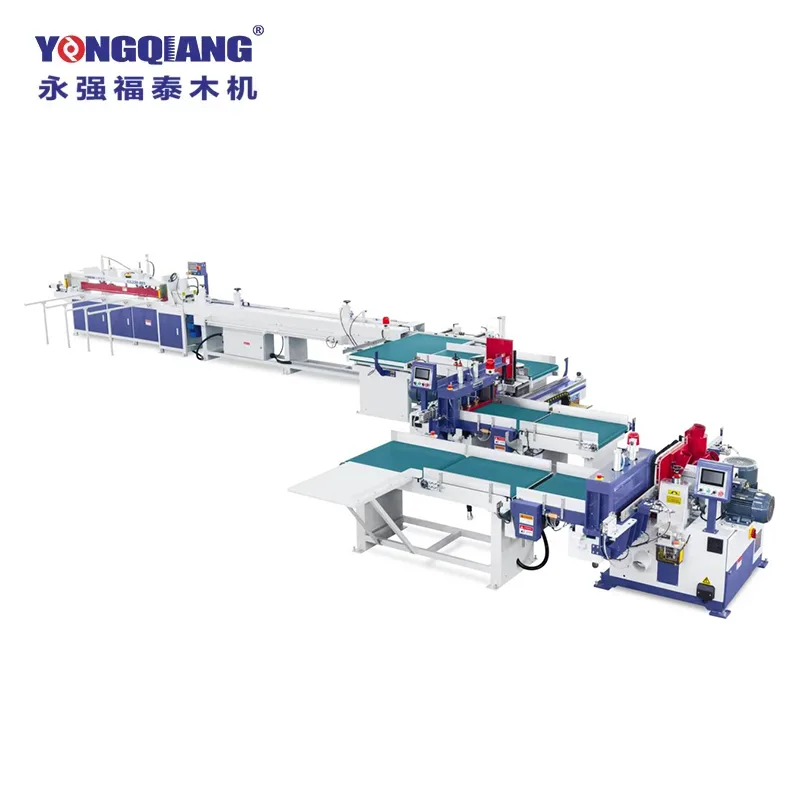
Semi-Automatic Finger Joint
Semi-Automatic Finger Joint is a mid-range, cost-effective toothed jointing and pressing equipment specially developed by Yongqiang Futai Manufacturer for small and medium-sized wood processing factories, wood form refurbishment enterprises, and individual workshops worldwide. It combines the advantages of manual auxiliary positioning and mechanical hydraulic automatic pressing, balancing the industry pain points of low efficiency of manual models, high cost of fully automatic models, and complex operation and maintenance. It is the core main production equipment for the after-toothing and lengthening and shaping of wood.
Automatic Finger Jointer
As a leading manufacturer specializing in the research and development, intelligent manufacturing, and global export of woodworking machinery, Yongqiang Futai has been deeply involved in the field of solid wood tooth joint processing equipment for more than 30 years. Relying on independent research and development technology and industrial precision manufacturing standards, it has created a Automatic Finger Jointer, dedicated to global wood processing, construction wood production, solid wood furniture manufacturing, and waste wood recycling enterprises, to create a labor-free, high-precision, and high-efficiency wood comb tooth opening processing solution.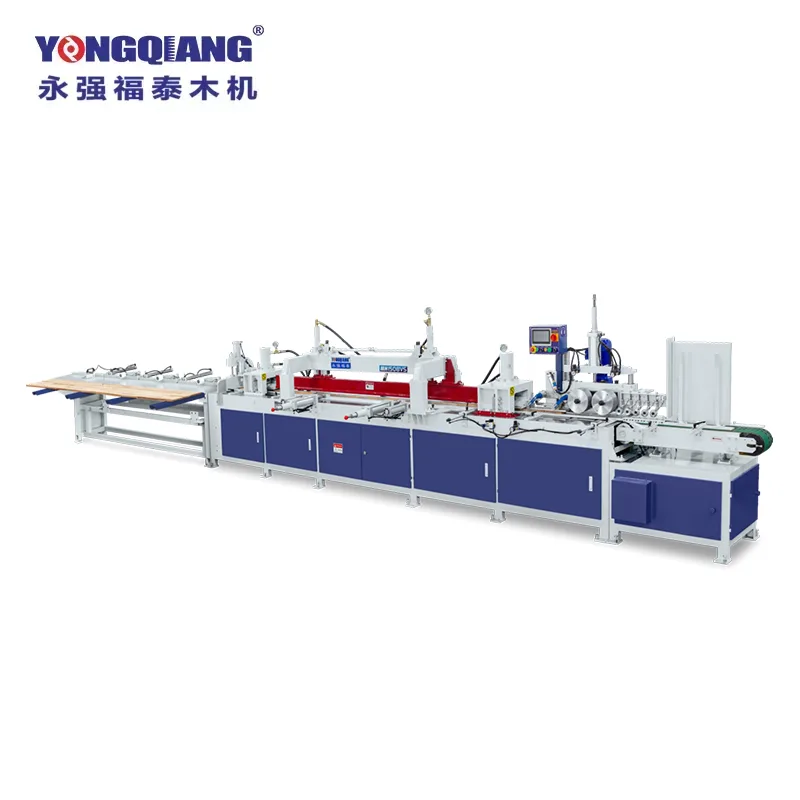
Full Automatic Wood Finger Jointer Machine
The Full Automatic Wood Finger Jointer Machine manufactured by Yongqiang Futai Factory is a CNC-integrated solid wood comb-teeth jointing equipment independently developed by the brand. It integrates automatic feeding, dual-end fine comb teeth, quantitative gluing, high-pressure connection, shaping discharge, waste material sorting, etc., and is specifically designed to solve the core problems in the wood processing industry such as short material waste, low efficiency of manual wood joining, large gap in combing teeth, easy cracking of bonding, inconsistent quality of batch production, and high labor costs.
Manual Finger Jointer
The Manual Finger Jointer supplied by Yongqiang Futai Factory is an economical woodworking jointing equipment specially designed by this brand for small wood processing factories, individual workshops, small-scale custom processing, and start-up wood enterprises. It is also a high-performance, cost-effective, and low-barrier-to-entry manual combing jointing equipment in the global woodworking industry.
- Related Blog
- Reviews
