
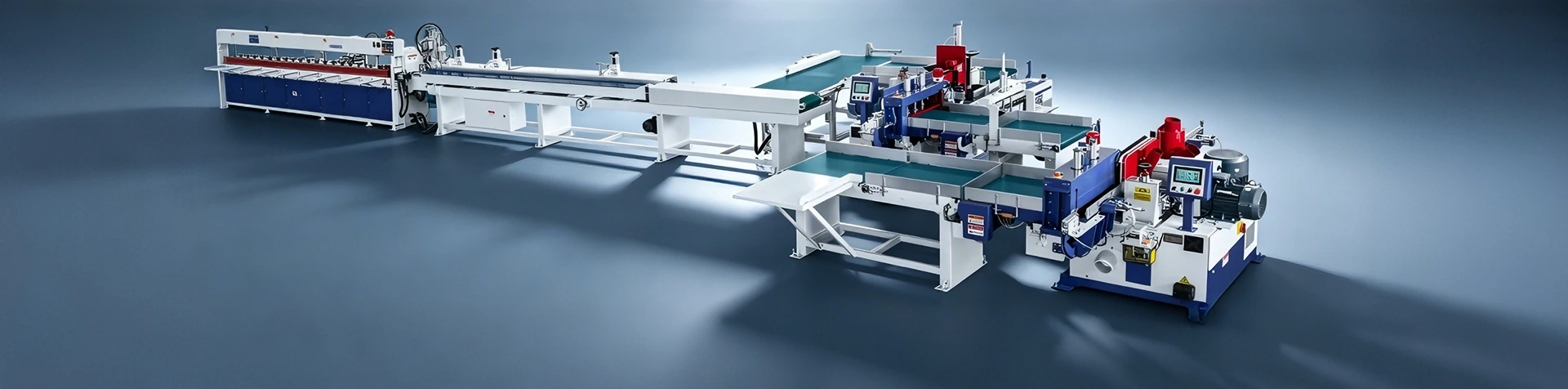
Semi-Automated Wood Interlocking Joint Processing Layouts
Modern woodworking demands efficiency without sacrificing precision, and our Semi-Auto Wood Tenon Splicing Assembly Lines deliver just that. These layouts integrate seamlessly with Half-Automated Timber Finger Joint Processing Systems, forming a streamlined workflow from raw timber to finished interlocking joints. For manufacturers scaling production, our Partially Automatic Wooden Interlock Tenon Production Chains offer a balanced combination of operator control and mechanized consistency. Every layout is engineered to pair with Semi-Automatic Square-Tooth Timber Joining Equipment Lines, ensuring tight-fitting square-tooth profiles that enhance structural integrity. The core benefit lies in reducing manual fatigue while maintaining the tactile feedback needed for fine adjustments—critical when processing hardwoods like oak or ash. Typical throughputs range from 800 to 1,500 linear meters per shift depending on material density and tooth spacing. Setup time between jobs averages under 12 minutes thanks to quick-change tooling plates and laser-guided alignment markers, making small-batch runs economically viable.
The Semi-Automated Wood Interlocking Joint Processing Layouts system is built around a modular chassis that accommodates multiple cutting heads and digital readouts. Below are the technical specifications that set this equipment apart. Key operational parameters include:
- Processing Width Capacity: 45 mm to 260 mm (single pass), extendable to 420 mm with dual-pass indexing
- Timber Thickness Range: 12 mm to 85 mm
- Saw Blade Diameter: 250 mm standard, optional 300 mm for dense exotic species
- Spindle Speed: 4,500 RPM servo-controlled, variable in 50 RPM increments
- Feed Rate: 6 m/min to 22 m/min, automatic load sensing
- Dust Extraction Port: 120 mm dual-flange, 2,800 m³/h airflow required
- Power Requirements: 380V 3-phase 50Hz, 7.5 kW main motor
- Control Interface: 7-inch touchscreen with pre-loaded tooth profile templates
- Machine Footprint: 2,850 mm x 1,340 mm x 1,620 mm (L x W x H)
The following table summarizes performance across common joint configurations, giving you a clear benchmark for integration into your shop floor.
| Joint Type | Tooth Pitch | Max. Pieces/Minute | Material Waste % |
|---|---|---|---|
| Straight Tenon | 15 mm | 18 | 2.3 |
| Finger Joint | 10 mm | 22 | 1.8 |
| Square-Tooth Interlock | 20 mm | 14 | 3.1 |
| Dovetail Tenon | 12 mm | 10 | 4.2 |
All contact surfaces on the Semi-Automated Wood Interlocking Joint Processing Layouts are hardened and chrome-plated, resisting resin buildup in high-production pine or spruce applications. The pneumatic clamping system delivers 800 kgf of holding force, adjustable in ten increments, so thin veneers and thick glue-lams receive equal treatment. Operators can override any automated sequence via dual palm buttons positioned at waist height, a feature that reduces fatigue-induced errors during long runs. Integrated linear encoders feed positional data directly to the touchscreen, letting you recall previous setups with ±0.15 mm repeatability. Maintenance intervals are signaled by hour-meter alerts; typical greasing points stay accessible without removing guards. For shops expanding into laminated beam production, the system optionally supports outfeed roller tables and automated stacking, creating a cohesive cell that slots between cross-cut saws and finishing sanders.
Related Products


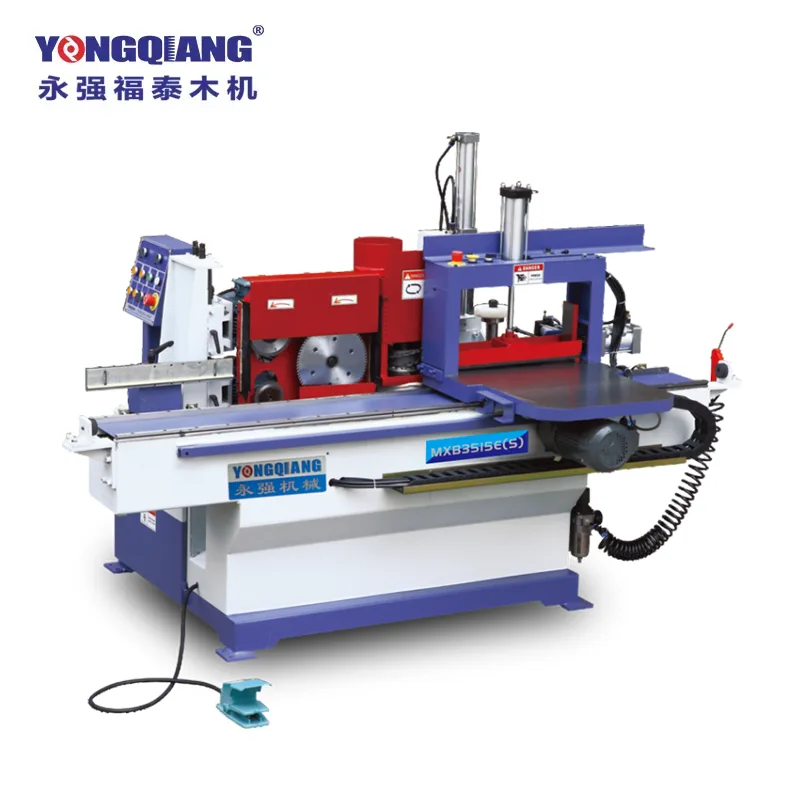


Hot Products

Finger Jointers
As a professional source manufacturer specializing in the research and development, precision manufacturing, and global cross-border export of Finger Jointers, Yongqiang Futai focuses on the technology research and quality upgrading of solid wood tooth joint processing equipment, and creates a series of high-performance woodworking tooth joint machine products, covering multiple fully automatic and semi-automatic models. It provides professional, efficient, and high-precision solutions for wood comb teeth, tenoning, and tooth joint processing for global wood processing plants, furniture production enterprises, construction wood square processing plants, and waste wood recycling merchants.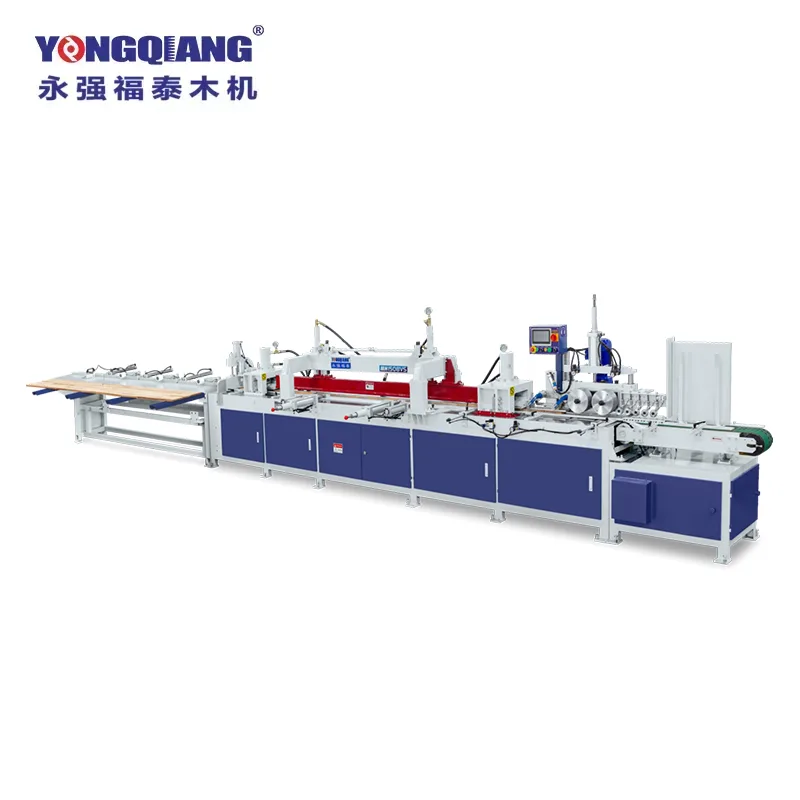
Full Automatic Wood Finger Jointer Machine
The Full Automatic Wood Finger Jointer Machine manufactured by Yongqiang Futai Factory is a CNC-integrated solid wood comb-teeth jointing equipment independently developed by the brand. It integrates automatic feeding, dual-end fine comb teeth, quantitative gluing, high-pressure connection, shaping discharge, waste material sorting, etc., and is specifically designed to solve the core problems in the wood processing industry such as short material waste, low efficiency of manual wood joining, large gap in combing teeth, easy cracking of bonding, inconsistent quality of batch production, and high labor costs.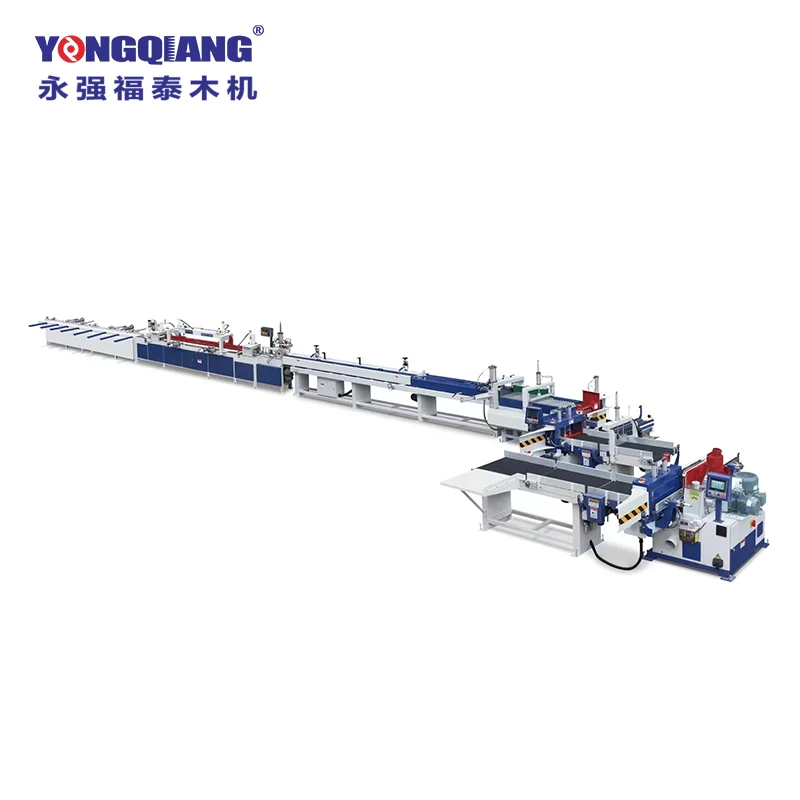
Fully Automatic Infinitely Long Finger Jointing Production Lines
YongqiangFutai's fully automatic infinitely long finger jointing production lines is suitable for various application scenarios of ultra long wood, and can achieve efficient and seamless infinite length wood tooth connection production, completely solving the problem of traditional wood length limitation.
Automatic Finger Joint Press
Are you looking for reliable manufacturers and suppliers of Automatic Finger Joint press? This product is manufactured by Yongqiang Futai Factory. It is a fully automatic wood jointing equipment that integrates automatic feeding, precise positioning, high-pressure pressing, and final material discharge. It is specifically designed for the renovation of building wood squares, the extension of short wood squares, the recycling of waste wood, and the assembly of solid wood furniture components. It completely solves the industry problems of low manual jointing efficiency, loose joints, high labor costs, uneven pressing force, easy deformation and rebound of wood materials, and inconsistent batch production quality. It realizes the integrated automatic extension and forming of comb-shaped wood materials.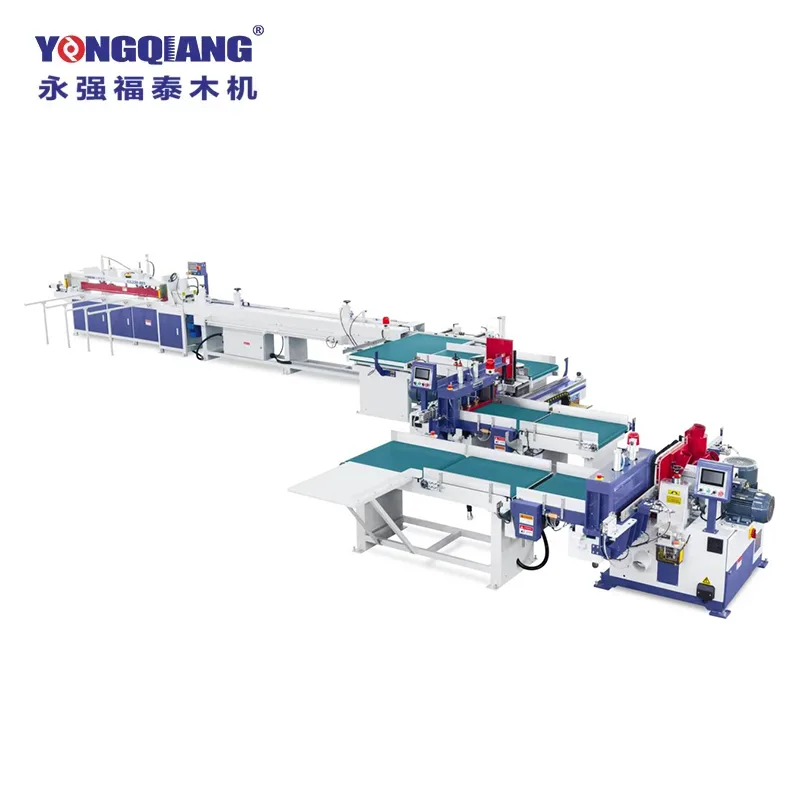
Finger Jointing Machines and Lines
The China Finger jointing machines and lines in Yongqiang Futai Factory are a complete series of solid wood comb jointing equipment independently developed by the brand, covering both single-machine processing and full-line automated production. They include manual comb jointing machines, fully automatic comb jointing machines, glue-coated comb jointing machines, comb jointing and pressing machines, infinite-length comb jointing forming production lines, and fully automatic comb jointing production lines for both wood boards and wood squares. These products are specifically designed to provide single-machine procurement, full-line customization, and one-stop comb jointing processing solutions for global wood processing enterprises, effectively addressing the core industry pain points such as waste of short wood materials, low efficiency of manual processing, poor joint quality, poor line connection, difficulty in large-scale production, and high overall costs.
Infinite Length Automatic Wood Joining Machine
The infinite length automatic wood joining machine is a disruptive wood processing equipment developed by Yongqiang Futai Company. It integrates intelligent recognition, high-precision milling teeth, automatic gluing, and continuous crimping, achieving true automation of infinite length wood production.
- Related Blog
- Reviews
