
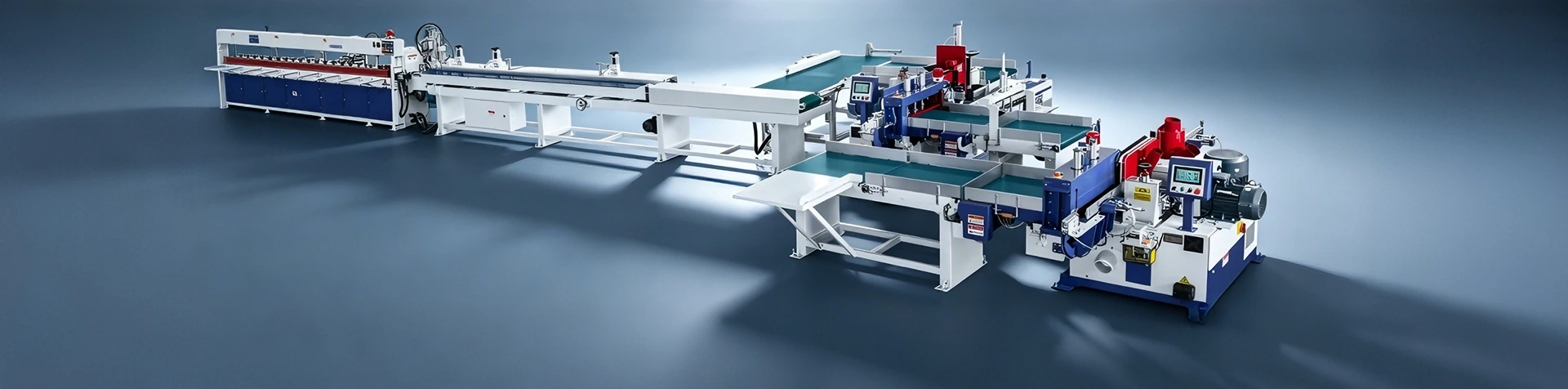
Hand-operated Tenon Groove Cutter
For woodworking professionals and dedicated hobbyists, achieving precise interlocking joints often starts with the right preparation tools. While many turn to solutions like the Manual Wood Finger Joint Milling Tool for finger joinery, or rely on the steady output of a Hand Crank Interlocking Tenon Shaping Machine for tenon profiles, the foundation of a strong connection frequently resides in a clean, accurate groove. Craftsmen looking for ultimate portability may opt for a Portable Manual Finger Notch Processing Tool, and those shaping through-tenons will appreciate the controlled cutting of a Hand Driven Wood Joint Tenon Former. Yet, none of these fully replace the dedicated function of a purpose-built groove cutter. Our newly designed hand-operated tenon groove cutter bridges this gap effortlessly, giving you the ability to cut consistent slots for loose tenons, splines, and joinery reinforcements without electricity or complex setups. It transforms rough lumber into ready-to-assemble components right on the workbench.
The Hand-operated Tenon Groove Cutter is engineered to deliver repeatable slot dimensions in hardwoods and softwoods alike. Unlike multipurpose jigs that require constant readjustment, this tool locks your desired groove width and depth immediately. The ergonomic hand crank transfers force through a hardened steel gear train directly to the twin cutting discs, which are faced with micro‑grain carbide teeth for longevity. Wood fibers are sheared cleanly, leaving a smooth channel that matches loose tenon stock perfectly. All guide fences are machined from anodized aluminum, featuring laser‑etched rulers in both metric and imperial scales. One notable advantage is the integrated dust ejection port that accepts standard shop vacuum hoses, keeping the cutting line visible and reducing cleanup. Whether you are crafting a single heirloom table or producing dozens of cabinet doors, the Hand-operated Tenon Groove Cutter maintains a workshop rhythm that combines speed with old‑world craftsmanship.
Detailed Product Parameters
Every component of the cutter has been selected for durability and precision. The following list highlights the core technical features that set it apart:
- Cutter body constructed from aircraft‑grade 6061 aluminum with a hard‑anodized surface for corrosion resistance.
- Dual‑blade cutting assembly uses replaceable carbide inserts; blade diameter is 100 mm with a 20 mm arbor.
- Adjustable groove width ranging from 6 mm to 14 mm via a calibrated lead screw mechanism; depth stop permits settings from 0 mm to 40 mm.
- Hand crank operates a 3:1 gear reduction, reducing operator fatigue and delivering smooth, chatter‑free motion.
- Linear bearing rails ensure that the cutter head remains perfectly parallel to the workpiece side face throughout the stroke.
- Quick‑lock fence system with fine‑adjustment knob allows offset distances from 15 mm to 80 mm from the reference edge.
- Total tool weight is 8.4 kg, providing stability during use while remaining portable enough for on‑site work.
- Packaging includes a molded carrying case, two spare carbide inserts, adjustment wrenches, and an alignment gauge.
The table below consolidates the primary specifications for quick reference. These figures have been verified through repeated testing on ash, oak, and birch samples.
| Specification | Detail |
|---|---|
| Cutting Action | Dual‑blade, opposed shear |
| Cutter Material | K10 micro‑grain carbide |
| Groove Width Range | 6 – 14 mm (1/4″ – 9/16″) |
| Maximum Groove Depth | 40 mm (1‑9/16″) |
| Minimum Workpiece Thickness | 18 mm |
| Fence Offset Capacity | 15 – 80 mm |
| Gear Ratio | 3:1 |
| Blade Diameter | 100 mm |
| Dust Port Outer Diameter | 35 mm (fits standard 1‑1/4″ hoses) |
| Body Material | Anodized 6061 aluminum |
| Tool Weight | 8.4 kg |
| Included Accessories | Carrying case, 2 spare inserts, adjustment wrenches, alignment gauge |
Maintenance is straightforward: the cutter housing opens without tools for chip removal, and the carbide inserts can be rotated or replaced in under two minutes. Regular lubrication of the linear rails and lead screw using a light machine oil will preserve the tool’s accuracy over years of heavy shop use. Because the entire mechanism is manually driven, there are no brushes or belts to wear out, making this an investment in enduring craft.
Related Products


Hot Products

Semi Automatic Finger Jointer
Yongqiang Futai has been focusing on the research and development of Semi Automatic Finger Jointer and global production for many years. We specialize in the research and development of economical semi-automatic gear joint machines for small wood processing plants, individual woodworking workshops, start-up building materials processing households, and small batch wood processing scenarios worldwide. Our main products are low-cost, easy to operate, small land occupation, simple maintenance, durable and stable lightweight woodworking gear joint processing solutions, perfectly filling the market gap of high cost, large land occupation, and unsuitability for small capacity processing of fully automatic equipment.
Finger Jointers
As a professional source manufacturer specializing in the research and development, precision manufacturing, and global cross-border export of Finger Jointers, Yongqiang Futai focuses on the technology research and quality upgrading of solid wood tooth joint processing equipment, and creates a series of high-performance woodworking tooth joint machine products, covering multiple fully automatic and semi-automatic models. It provides professional, efficient, and high-precision solutions for wood comb teeth, tenoning, and tooth joint processing for global wood processing plants, furniture production enterprises, construction wood square processing plants, and waste wood recycling merchants.
Automatic Finger Joint Press
Are you looking for reliable manufacturers and suppliers of Automatic Finger Joint press? This product is manufactured by Yongqiang Futai Factory. It is a fully automatic wood jointing equipment that integrates automatic feeding, precise positioning, high-pressure pressing, and final material discharge. It is specifically designed for the renovation of building wood squares, the extension of short wood squares, the recycling of waste wood, and the assembly of solid wood furniture components. It completely solves the industry problems of low manual jointing efficiency, loose joints, high labor costs, uneven pressing force, easy deformation and rebound of wood materials, and inconsistent batch production quality. It realizes the integrated automatic extension and forming of comb-shaped wood materials.
Infinite Length Automatic Wood Joining Machine
The infinite length automatic wood joining machine is a disruptive wood processing equipment developed by Yongqiang Futai Company. It integrates intelligent recognition, high-precision milling teeth, automatic gluing, and continuous crimping, achieving true automation of infinite length wood production.
Automatic Finger Joint Shaper
Yongqiang Futai's Automatic Finger Joint Shaper represents the highest level of wood processing technology today. The equipment adopts advanced servo control system and precision mechanical design, which can achieve high-speed and high-precision comb tooth processing of various woods, ensuring perfect matching of each tooth interface. Easy to operate and maintain, it is an ideal choice for modern timber enterprises to enhance their competitiveness.
Semi-Automatic Finger Jointing Lines
The Yongqiang Futai Semi-Automatic Finger jointing Lines is an innovative equipment designed specifically for small and medium-sized wood processing enterprises. It is easy to operate and perfectly balances the efficiency of automation with the flexibility of manual operation. It can produce high-strength and seamless connected tooth joint wood.
- Related Blog
- Reviews
