
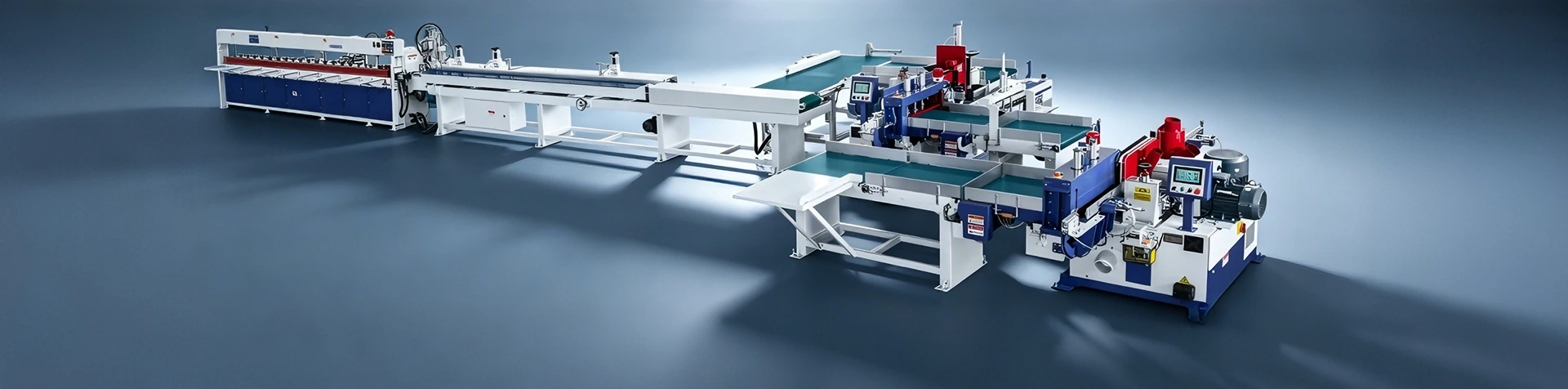
China Hand Cranked Finger Notch Shaping Equipment Manufacturer, Supplier, Factory
For woodworkers who demand precise finger joints without the roar of a router, our Hand Cranked Finger Notch Shaping Equipment delivers bench-top control that powered solutions cannot match. This tool belongs to a family of purpose-built manual joinery machines that have earned trust in cabinet shops and timber framing studios. At the heart of the system is the straightforward Hand-operated Tenon Groove Cutter, which handles linear grooves for drawers and frames. When more complex finger profiles are needed, the Manual Wood Finger Joint Milling Tool steps in for dovetail-equivalent strength. Our current machine shares the crank-driven philosophy of the Hand Crank Interlocking Tenon Shaping Machine, but focuses exclusively on symmetrical finger notches for glue-ups and box construction. For job sites where portability is key, the Portable Manual Finger Notch Processing Tool offers similar cut quality in a lightweight clamp-on design. The hand crank gives immediate feedback on grain direction, letting you slow down on figured maple or speed through clear pine, producing joints that test higher in pull-apart strength than router-cut alternatives. In an era of rising energy costs and workshop noise regulations, a hand-cranked machine allows for late-night production without disturbing neighbors, and it teaches apprentices the feel of a clean cut that push-button CNCs simply cannot convey.
The Hand Cranked Finger Notch Shaping Equipment is built around a solid cast-iron base that absorbs vibration and doubles as an accurate reference plane. A spring-loaded hold-down clamp secures stock up to 45 mm thick, while the micro-adjustable fence system ensures repeatable offset from the edge. The crank arm rotates a precision-ground cam that advances the cutter head through the workpiece at a constant 0.8 mm per revolution, preventing the inconsistent feed that causes chipping. The four-blade M2 HSS cutter runs in shielded ball bearings and can be easily removed for sharpening or switching to optional profile templates—including 8 mm, 12 mm, and 16 mm notch widths. A transparent chip guard and integrated 50 mm dust port keep the work area clean. Between cuts, the depth stop can be locked into one of twelve presets, making it simple to run a batch of identical drawer fronts or box sides. An optional extension table with flip-up stops handles longer panels up to 1200 mm. During factory testing each unit is subjected to a 200-cycle repeatability trial where finger notch depth variation is held to ±0.08 mm. Routine maintenance consists of occasional lubrication of the crank gear and checking parallelism with the included gauge block—a five-minute procedure that keeps the tool within tight tolerance for years of daily use.
Key Features at a Glance
- 3:1 gear reduction hand crank for effortless operation and tactile feedback
- Quick-change cutter head system accommodates multiple notch profiles without recalibration
- Auto-parallel clamping with one-hand quick release
- Precision depth stop with 12 positive detents for batch consistency
- Heavy cast-iron structure with durable powder-coated finish
- Compatible with standard 50 mm dust extraction outlets
- Includes 3 HSS cutter templates, crank handle extension, and adjustment tools
Technical Specifications
| Specification | Detail |
|---|---|
| Model | HC-FNJ200 |
| Drive | Manual Hand Crank |
| Max Cutting Width | 200 mm (7.9 in) |
| Max Stock Thickness | 45 mm (1.75 in) |
| Cutter Head Speed | 100-150 RPM (dependent on cranking speed) |
| Cutter Material | M2 High-Speed Steel, 58-60 HRC |
| Table Dimensions | 420 mm × 260 mm (16.5 in × 10.2 in) |
| Weight | 19 kg (42 lbs) |
| Dust Port Diameter | 50 mm (2 in) |
| Parallelism Tolerance | 0.15 mm over full width |
| Included Accessories | 3 notch templates, crank handle, depth setting gauge, L-wrenches |
Ideal Applications and Setup Tips
This manual shaper excels with solid hardwoods such as oak, walnut, and hard maple, as well as softwoods like pine and cedar. It also handles plywood and MDF when using a slower, steady crank rhythm. For best glue bond strength, run a test piece first and adjust the depth stop until the finger crown sits flush with the mating surface. A light coat of paste wax on the table eases stock feed, and covering the cutter head when not in use prevents surface oxidation. Because the machine requires no electricity, it can be set up on any sturdy workbench—even outdoors at a remote timber frame project.
Related Products




Hot Products

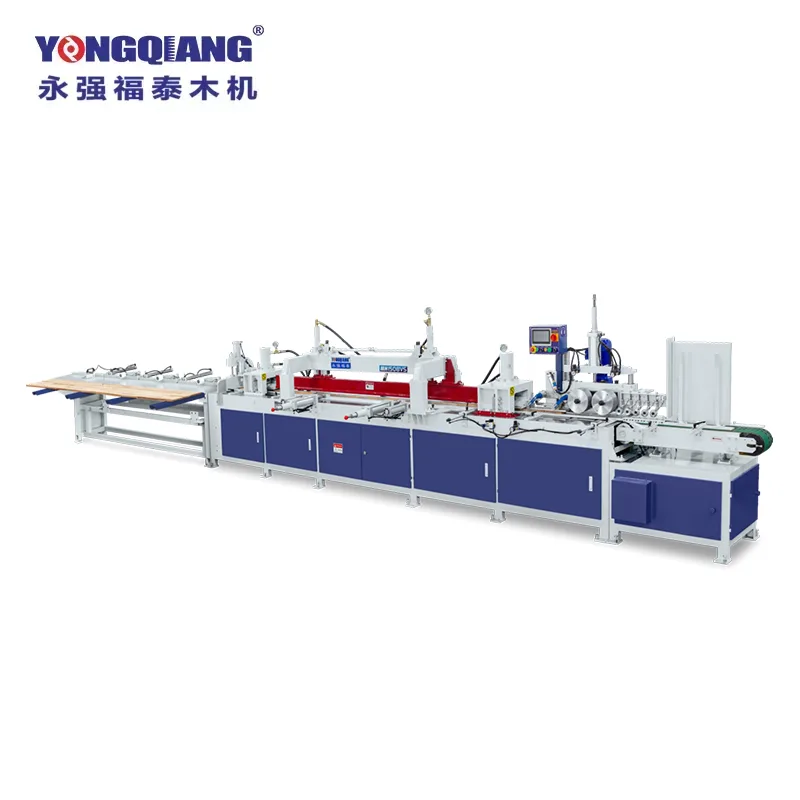
Semi-Automatic Finger Joint
Semi-Automatic Finger Joint is a mid-range, cost-effective toothed jointing and pressing equipment specially developed by Yongqiang Futai Manufacturer for small and medium-sized wood processing factories, wood form refurbishment enterprises, and individual workshops worldwide. It combines the advantages of manual auxiliary positioning and mechanical hydraulic automatic pressing, balancing the industry pain points of low efficiency of manual models, high cost of fully automatic models, and complex operation and maintenance. It is the core main production equipment for the after-toothing and lengthening and shaping of wood.
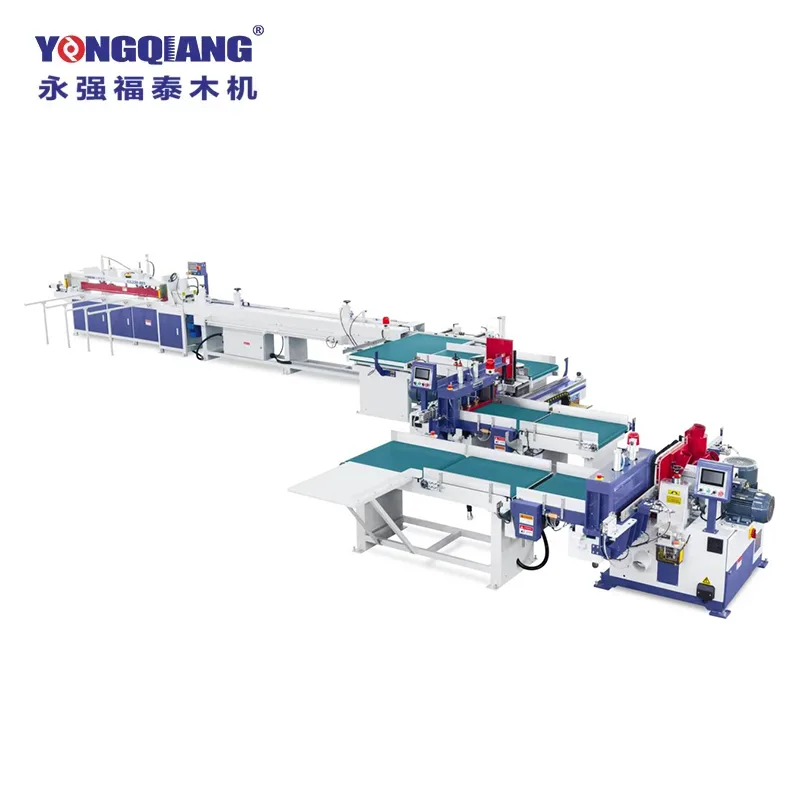
Semi-Automatic Finger Jointing Lines
The Yongqiang Futai Semi-Automatic Finger jointing Lines is an innovative equipment designed specifically for small and medium-sized wood processing enterprises. It is easy to operate and perfectly balances the efficiency of automation with the flexibility of manual operation. It can produce high-strength and seamless connected tooth joint wood.
Fully Automatic Infinitely Long Finger Jointing Production Lines(Automatic Stacking And Collecting System)
Yongqiang Futai is the manufacturer of Automatic Stacking And Collecting System Lines. This Fully Automatic Infinitely Long Finger Jointing Production Lines(Automatic Stacking And Collecting System) is a high-end intelligent equipment designed for efficient splicing of solid wood short materials, unlimited long continuous production and automatic collection of finished products. It is specifically tailored for furniture manufacturing, construction wood forms, and integrated material processing industries. As the core product of Yongqiang Futai's deep engagement in wood processing automation, this production line integrates precise mechanical transmission, intelligent numerical control control and modular design, achieving fully automated operations from short material loading, comb teeth splitting and gluing, unlimited long pressing and cutting to automatic stacking and finished product collection. It completely resolves the pain points of low efficiency in traditional tooth joint technology, high labor costs, unstable splicing accuracy and cumbersome finished product collection.
Fully Automatic Finger Jointer
The Fully Automatic Finger Jointer developed by Yongqiang Futai Manufacturers is a high-performance core equipment for joining solid wood short materials, meticulously manufactured. It is dedicated to addressing the core pain points in the global wood processing industry, such as high reliance on manual labor in traditional tooth-jointing operations, poor joint accuracy, low production efficiency, inconsistent product qualification rates, high wood waste, and high maintenance costs.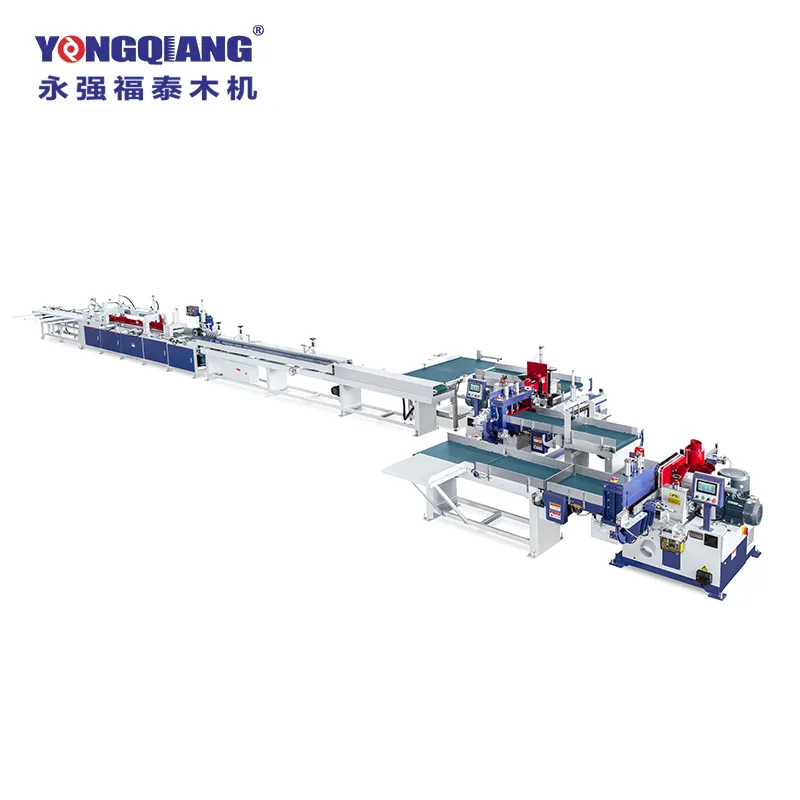
Compact Finger Jointing Lines
Yongqiang Futai focuses on the research and development of Compact Finger Jointing Lines, intelligent manufacturing, and global cross-border supply. It has been deeply involved in the field of solid wood short material extension equipment for many years. Relying on independent research and development technology and refined manufacturing processes, it has launched a compact gear joint production line, which is specially designed for small and medium-sized wood processing plants, small production capacity furniture workshops, waste wood recycling stores, and small factory woodworking processing scenes. It creates a lightweight gear joint processing solution with small land occupation, high efficiency, easy operation, and low cost.
Short Wood Square-Tooth Finger Jointing Machine
The Short wood square-tooth finger jointing machine produced by Yongqiang Futai Factory is a specialized and automated comb-teeth jointing equipment specifically developed and customized for waste short wood planks, construction waste wood planks, furniture short wood materials, and woodworking edge and corner waste. It integrates automatic feeding, precise comb teeth, quantitative gluing, high-pressure connection, and finished product discharge. It specifically addresses industry pain points such as waste from short wood planks, extremely low efficiency of manual assembly, loose and easily broken joints, misalignment during short and long material connection, high labor costs in the workshop, and low wood utilization rate.
- Related Blog
- Reviews
